
At RUSUU’s factory in Suqian, China, completing production is only part of preparing a custom bus shelter for delivery. Before packing begins, our team checks the finished shelter against the drawings approved by the customer. We then plan how to protect the parts most vulnerable during transport: painted metal surfaces, glass edges and electronic displays.
Checking the finished shelter against the drawings
Our inspectors measure key dimensions, including the spacing between posts, and check the positions of the seats, glass panels and display cabinet. They examine welds, fasteners and the surface finish for defects. For a smart bus shelter, the inspection also includes a power-on test: the team checks the lighting and verifies that the LCD passenger information display shows the intended content. Finding a mismatch at the factory gives us the opportunity to correct it before the shelter reaches the installation site.
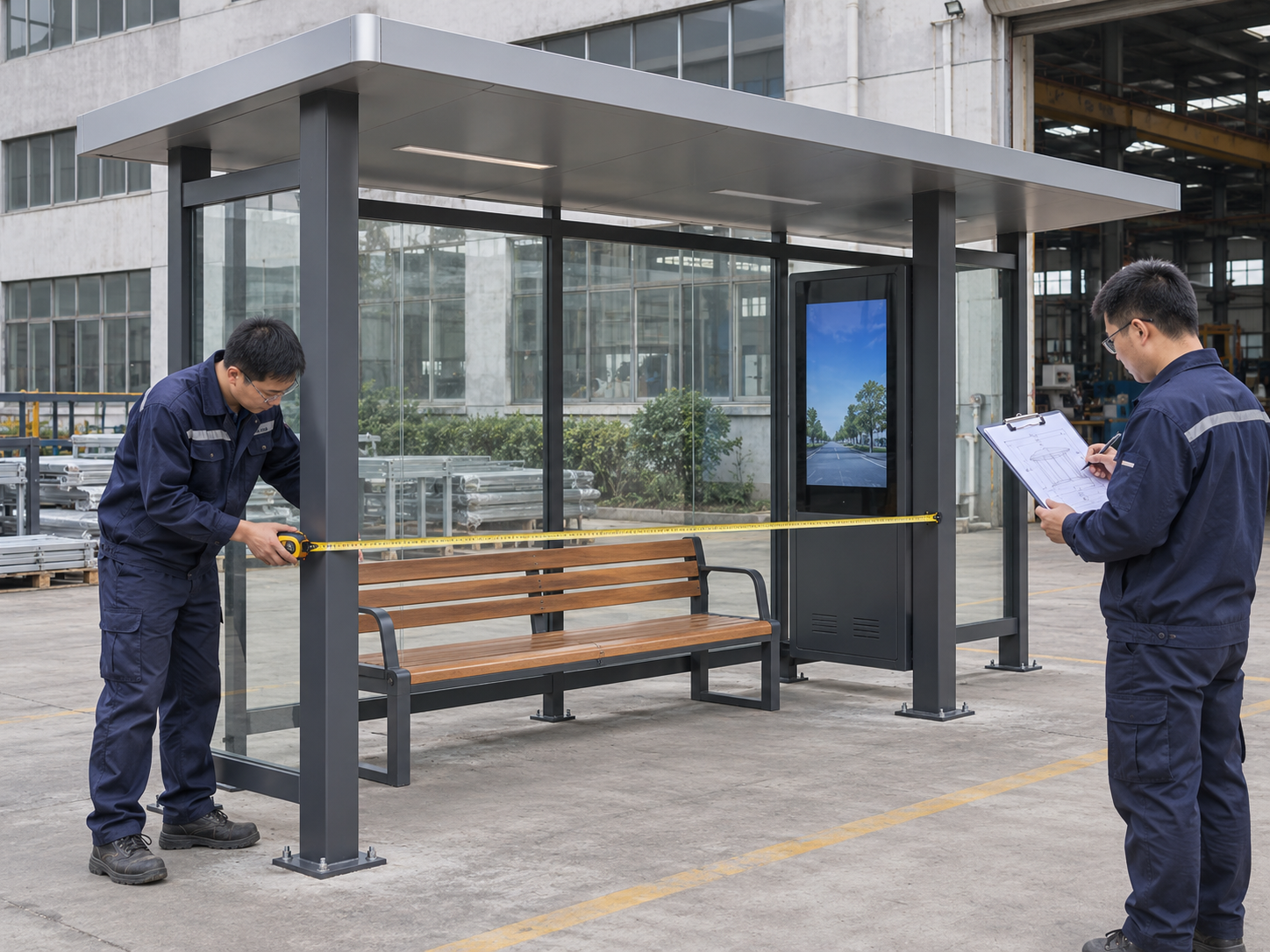
Image 1 — Factory inspection: checking post spacing against the shelter drawing. AI-generated process illustration.
Packing each component for the journey
A painted frame, a glass panel and an LCD screen need different kinds of protection. For metal sections, padding separates finished surfaces so they cannot rub against each other. Glass panels need protected edges and support that keeps them from shifting. For an LCD unit, cushioning around the cabinet helps keep packing pressure off the screen itself.
The exact packing arrangement depends on the shelter dimensions, equipment and shipping method. The aim is straightforward: the parts that fit together and work correctly at our factory should reach the customer in the same condition, ready for installation.
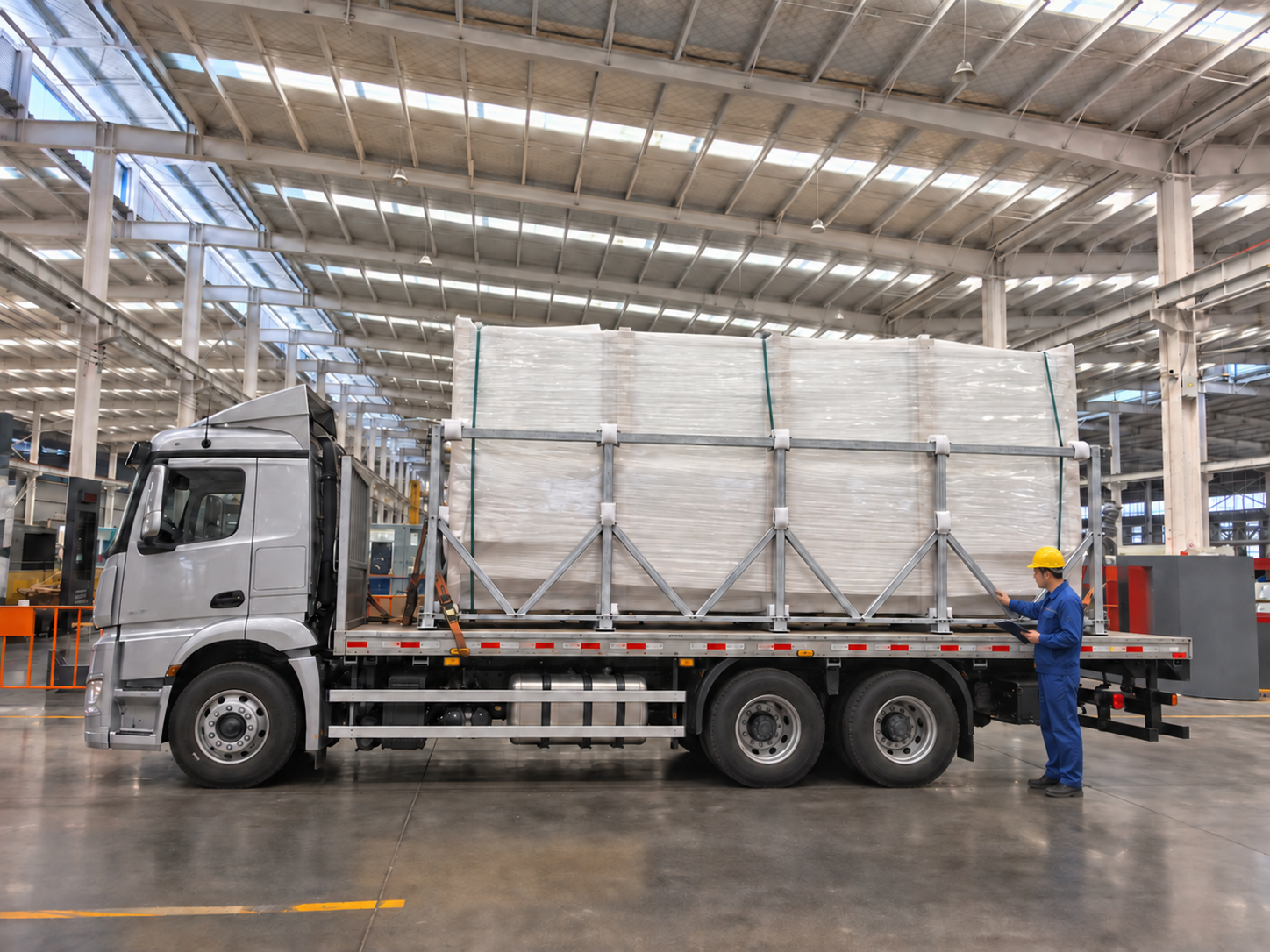
Image 2 — Export packing: protective padding on frame sections, a glass transport rack and a cushioned display crate. AI-generated process illustration.
Post time: Nov-03-2026